Data is an inseparable part of who we are. We have always relied on data for numerous reasons. Be it competitor analysis, finding job listings, or academic research, the utility of data is all-pervasive. Analyzing available data helps you make predictions, compare prices, gain insights into the public’s general sentiments, and even find jobs. All in all, it lets you stay ahead of the curve.
Fast-forward to the year 2014, from when the World Wide Web was first introduced, the number of websites had crossed a whooping one billion mark. Sorting and scraping manually amongst those numbers is an unattainable feat, the solution to which is data scraping.
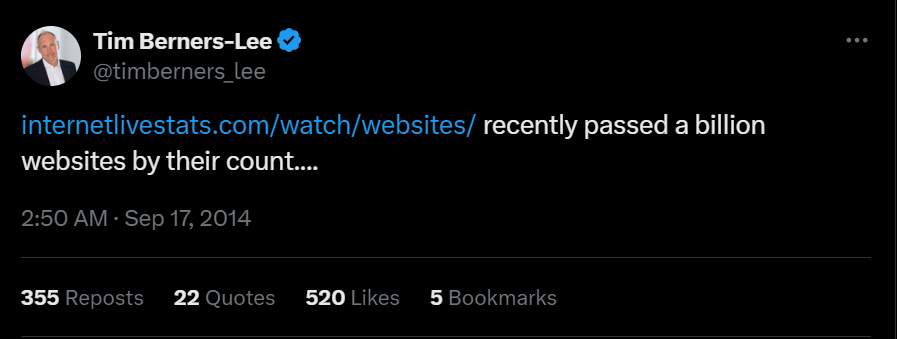
Tweet: Tim Berners-Lee
Data scraping, or web scraping involves the use of automated tools for data extraction. Similar to how you enter a URL or click a link to access a web page, a bot imitates these steps using automation. Only, it is much faster and more efficient in terms of performing both the function of parsing and storing the extracted data.
For all its intents and purposes, unsurprisingly this process has been subjected to underhanded means for obtaining data and in turn, invasion of privacy. One should avoid trespassing on these borders to avoid any legal repercussions.
Read further as we discuss the popular use cases of data scraping, their impact through examples and case studies, and the ethical considerations one must always keep in mind. You might just find out why you need to leverage the power of data scraping as well.
Market Research
Your product is in the market as long as there is a demand for it. To ensure that, you would need to conduct market research to understand consumer trends and your target audience, monitor competition, get the timing right for promotion or launch, keep tabs on public sentiments, and so on and so forth.
Almost every industrial sector out there relies on the available data to make informed decisions. Introducing any changes or updates needs to align with the current market situation, as any delay could result in unsatisfactory results. Therefore, reducing the time between the collection and analysis of the data, and the implementation of a new strategy became vital.
Case Study:
The British Food Journal in one of their published papers, presents a case study of the company “QuieroVinos, S.L.”, an online wine shop founded in 2015 that sells Spanish wines in two main marketplaces.
It mentions using an application that tracked QuieroVinos’ competitors’ prices for a set of products. It accounted for information like product cost and minimum product margin to check if decreasing the price was possible to reach the top cheapest position, which in turn can increase sales.
Data scraping in this context was used to get all the interesting data from the marketplace websites regarding the company’s target products. The information was then exported to a JSON file and stored in the local database. Another computer process was used to analyze the stored data.
Competitor Analysis
There has been an increase in accessibility by the general public for all possible resources under the Sun. It has resulted in a massive influx of businesses and start-ups, leading to heavy competition. To gain an edge, you need a better understanding of brands or companies like yours, which calls for competitor analysis through data scraping.
For example, you can use web scrapers to scrape through E-Commerce websites to monitor your competition and gain information like pricing data, marketing strategies, shortfalls, and customer feedback. The collected data can support your inventory management and marketing efforts, which in turn can increase your sales and profitability.
Lead Generation
The main role of lead generation is to attract potential customers toward your products or services and to convert their interests into sales. This is a popular process used for multiple reasons, some of which include expanding your consumer base, building rapport with potential partners, building visibility and awareness, etc.
Some common ways of generating leads are outreach with cold calls and emails, PPC advertising, landing pages, influencer marketing, and search engine optimization for increasing visibility. Web scraping for lead generation boosts the overall process, giving you more reliable data and accurate results.
Lead generation through scraping offers a centralized solution to target your marketing efforts efficiently. You can obtain data of individuals (available publicly) like their names, contact numbers, and email addresses by spreading the net further than was manually possible. All the data can be easily stored in your company’s customer relationship management (CRM) system.
Ranking Through Content and SEO
Trend, in popular terms, is a collective behavior where people begin to follow something that is ‘en vogue’ at a given point in time. These trends tend to change quite frequently, even amongst one concerned subject. By using Search Engine Optimization for the content you publish, your brand or business can increase its visibility, following the rising trends and users’ search intent.
Data scraping from the web further simplifies the process by getting you the information you specifically need in your business niche. It can also be used to analyze backlinks for trustability and authority and find any broken links on your website. The process can be automated to identify top-ranking results regularly to stay updated with the latest trends.
Addressing the Ethical Concerns Around Data Scraping
Is it illegal to scrape data from the web? Answers to this question vary with differences in context. Mostly, web scraping is performed by bots in the same way humans browse the web and access data manually. In this sense, the data accessed is available for public use and discretion.
There will be times when you encounter sources with different privacy policies and a more rigid set of rules, disallowing unauthorized access or use of its data.
Laws around data scraping or web scraping are no longer the “grey areas” they initially were thought to be. The firm set of regulations surrounding the access and use of data is to be followed by everyone, be it an individual or a business.
The said laws and regulations vary from country to country. Therefore, a thorough knowledge of the laws of the country from where you conduct data scraping is a must. Violation of these laws or copyright infringement can end up with legal consequences, negatively affecting your business’ reputation.
The Conclusion
Competitive pricing, market research, and sentiment analysis are the most common aspects of business intelligence performed using data scraping.
To maintain your digital presence, it is important to watch your rivals from a business standpoint. It would mean receiving timely updates on the frequent price variations and accurate market data which is made possible through automation in scraping. Want to check out some of the best tools for data scraping? Read this blog to know more.
Data scraping being a very cost-effective and easy-to-maintain option for gathering business intelligence, is often vulnerable to malpractice and unethical use. It will be in the best interests of any individual or service provider to exercise caution, treading carefully around the intricacies of copyright laws and respecting others’ privacy.