What is Lead Generation?
Lead generation plays a crucial role in marketing and sales. It is a process that involves identifying and attracting potential customers, or leads, who show interest in your product(s) or service(s) with the main goal of converting them into actual customers.

There are three aspects to lead generation:
- Identification – The process starts with identifying your target audience as individuals or businesses. It can be done through website forms, surveys, referrals, networking at events, etc.
- Attracting Interest – This phase in lead generation calls for strategies to capture the attention of identified leads.
- Converting Leads – Converting leads is what defines the success of your campaign. Here, you convert those who had shown interest into actual customers.
From where can you generate leads?
- Inbound – Organically generate leads through websites, blogs, videos, or ebooks.
- Outbound – Reach out to your identified leads using cold calls, emails, or advertising.
- Referrals – You can encourage your existing customers to refer you to other interested people they know.
- Networking – Organize or participate in events, conferences, or networking sessions.
While its importance is quite evident, this is a rather simplified explanation of what lead generation is. Once you get into the process, you will encounter multiple challenges that may hinder your pace in creating a profitable network.
Why Do You Need Scraping For Lead Generation?
Data scraping is a powerful tool for lead generation across various industries. Here are three industries that can gain immense benefits from scraping for lead generation:
RETAIL
- Finding Property Buyers or Sellers – Scraping data can help you identify potential buyers or sellers in real estate. You can extract property listings, contact details, and preferences from platforms like Zillow or Realtor.com.
- Competitive Edge – With data scraping, retailers can monitor competitor’s pricing, product availability, and customer reviews to adjust their strategies.
E-COMMERCE
- Lead Generation for E-commerce Promotion – Dynamic data scraping can provide insights into product trends, pricing, and customer reviews. This data helps you tailor campaigns and optimize marketing strategies.
- Efficiency – Automate data collection to quickly grab prices, product features, and other relevant information from multiple sources online.
HEALTH CARE
- Targeted Healthcare Leads – Healthcare companies can find highly targeted leads such as physicians, dentists, hospital administrators, and nurses with scraping. You can find leads directly linked to specific healthcare plans or within a specific area.
- Decision-Making – Analysis of complex data, improved decision-making, and reduction in fraud attempts can be accomplished with better efficiency.
How Can You Generate Leads Using Data Scraping?
Make Your Own Scrapers
If you are comfortable with coding in any programming language (like Python), then it would be a piece of cake for you to build your custom scraper. The reason for Python being a popular choice is the language’s easily comprehensible syntax and rich library collections.
While building your own scraper, you may utilize different libraries like Selenium for automation, BeautifulSoup for parsing HTML content, and Pandas for data analysis.
Build A Web Scraper Using Python
- Begin by listing the information you need (email addresses, contact information, names, etc.) and understanding challenges like IP address blocking and CAPTCHAs.
- Identify your target websites based on the type of leads you require.
- Start developing your scraper using Python. Choose appropriate libraries and write your code.
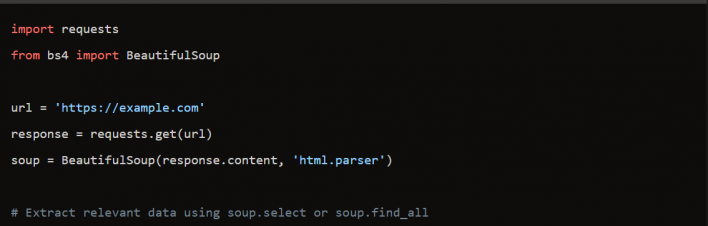
- Use rotating proxies to avoid getting blocked and limit your requests to avoid suspicion.
- Test your scraper on a small database first and check if you are able to extract the information you need.
- Import the collected data in a CSV, JSON, or database and integrate it in your CRM system.
- You can also schedule data collection by using a cron job or cloud services.
Use Web Automation Software
If you want to opt for no-code options to scrape data, you can go for applications like Web Scraping API, Octoparse, and Airtable. These allow you to build and edit workflows to automate your scraping process for dynamic data collection. Most of these software have similar scraping processes. For detailed information on any particular tool, visit their guides or tutorials.
Automate Web Scraping for Lead Generation
- Select your no-code approach. Given your choice of tool, you may have to install a desktop application or browser extension. You can use Web Scraping APIs to scrape the technical details.
- Again, identify your target website. You can scrape data from Yelp, Google Maps, or any social media site.
- Complete the installation of your tool and start building your scraper. Your tool’s visual interface should allow you to easily navigate a website and select the data you want to extract.
- Point and click on the required elements. A workflow will be simultaneously created which you can make changes to later on.
- Your tool would have the option to automate web actions like clicking and typing. You can either run the scraper manually or schedule to run it periodically.
- The data can be stored then, in a suitable file on your local computer.
Technology in web scraping has advanced significantly to bypass measures like CAPTCHAs, verifications, and rate limiting along with traps like honeypot. Still, it is advisable to respect the website’s terms and privacy policy. Adhere to the scraping regulations applicable in your country to avoid lawsuits.
Benefits of Web Scraping for Lead Generation
It is much faster
Generating leads organically can take up a lot of your valuable time and resources. Web scraping eliminates the waiting time for your organic traffic to grow. Instead of taking your chances with a broad audience, you can narrow down your target by extracting leads from websites where your ideal customers are active. With web scraping, you choose immediate results over gradual growth.
It provides scalability
With the expansion of your audience, you may be required to keep creating additional content to maintain consistent pipelines. With the growing customer base, the efforts you put into organic marketing increase considerably. Using web scraping, you can scrape websites at a large scale, ensuring a steady flow of leads.
It is adaptable
Over time, you have to keep making adjustments in your strategies according to the SEO algorithms and changing content trends. Similarly, in networking and outbound, you have to test the grounds and put effort into finding the right leads and converting them into customers.
Whereas, with web scraping, you can easily modify the scrapers to accommodate to the evolved structure of websites. You can focus on reaching close matches to your target audience.
It gives you control over quality
The use of traditional methods of lead generation can hold you back for multiple reasons. This includes irrelevant leads, varying quality of leads from referrals, and lower response rates in outbound marketing.
Scraping allows you to target websites with your ideal customer base, focus on leads that match specific criteria, and improve the overall quality of your leads.
Want web scraping at scale? Visit this blog to find out which web scraping tool is the best for your needs.